HDFS 5255: Living with Chronic or Life-threatening Illness (Storrs)

October 6, 2025

[UConn Storrs]

Graduate courses act as Honors credit, as long as you earn a grade of B- or higher.

Instructor: Keith Bellizzi

Chronic and/or life-threatening illness from diagnosis through long term management. Psychological, interpersonal, family, and ethical aspects of the chronic illness experience across the life span, in contexts for culture and health policy.

CHEM 2443: Organic Chemistry (Storrs)

October 3, 2025

[UConn Storrs]

Instructor: Nicholas Leadbeater

Prerequisite: CHEM 1128Q, 1138Q, 1148Q, or 1126Q (1126 may be concurrent). Only two credits after passing CHEM 2241.

The material in Honors CHEM 2443 is much like that in the non-Honors sections of CHEM 2443, but it will go into more detail on various topics. It is also taught differently, with class periods dedicated to discussion and practice problems. Additional support is available from a graduate teaching assistant and undergraduate peer mentors.

CHEM 2444: Organic Chemistry (Storrs)

[UConn Storrs]

Instructor: Nicholas Leadbeater

Prerequisite: CHEM 2443 (Honors or non-Honors)

The material in Honors CHEM 2444 is much like that in the non-Honors sections of CHEM 2444, but it will go into more detail on various topics. It is also taught differently, with class periods dedicated to discussion and practice problems. Additional support is available from a graduate teaching assistant and undergraduate peer mentors.

CHEM 1147Q: Honors General Chemistry I (Storrs)

[UConn Storrs]

Instructor: Thomas Seery

CHEM 1147Q is the Honors version of CHEM 1127Q, and it may be used in place of CHEM 1127Q for any pre-requisite or other requirement. CHEM 1147Q has a smaller lecture section than CHEM 1127Q, and it requires more personal initiative in the laboratory assignments. It also uses some calculus, compared to the algebra used in CHEM 1127Q.

CA 3-Lab, Q
TOI-6L, Q

CHEM 1148Q: Honors General Chemistry II (Storrs)

[UConn Storrs]

Instructor: Douglas Adamson

Prerequisite: CHEM 1147Q. If you took CHEM 1127Q or 1137Q and would like to enroll in CHEM 1148Q, email Prof. Adamson for permission.

This Honors version of CHEM 1128Q will complete the general chemistry sequence for any science major and for pre-med/pre-dent requirements.

CHEM 1148Q has a smaller lecture section than CHEM 1128Q. and it requires more personal initiative in the laboratory assignments. It also uses some calculus, compared to the algebra used in CHEM 1128Q.

CA 3-Lab, Q
TOI-6L, Q

BIOL 1107: Principles of Biology I (Storrs)

[UConn Storrs]

Instructor: Thomas Abbott

Introductory biology course covering topics from both molecular & cell biology and physiology & neurobiology. Intended for students who will continue into higher level science courses.

The Honors version is designed for students who will be conducting research in biology, so it is more interdisciplinary (basic chemistry) and inquiry-based, and the lab will expose students to a wider range of topics and techniques. To help prepare you for your first research position, the Honors version makes greater use of primary literature and includes more of the tools used in MCB/PNB research labs.

CA 3-Lab
TOI 6-L

POLS 3025: Political Theory and Popular Music

October 2, 2025

[UConn Storrs]

The use of music for political ends has a long history, but the relationship between popular songs and political institutions, ideas, and movements has become more prevalent in the 20th and 21st centuries. In this course, you will explore influential political theories from the modern era and the relationships of those theories to musical genres such as hip-hop, pop, punk, reggae, folk, and rock. You and your classmates will also conduct original research examining the connections between the lyrics of popular songs and ideas about the state of nature, classical liberalism, feminism, racial equality, communism, anarchism, and conservatism. This interdisciplinary course draws upon normative political theory, empirical political science, psychology, communications, musicology, ethnomusicology, masculinity studies, and public ethics.

AAAS 2020: Introduction to Critical Muslim Studies

[UConn Hartford]

What does it mean to “see” Muslims in the world today? What happens when we study Islam and Muslims not from a Western-centric lens, but from the perspectives of diaspora, lived experience, and decolonial critique? How do we recognize and challenge anti-Muslim racism and Islamophobia? How do gender, sexuality, and youth culture shape Muslim identities? How do colonial histories, global power structures, and contemporary politics shape how Muslims are represented and how they represent themselves? Let’s find out together!

This course introduces Critical Muslim Studies as an interdisciplinary field that explores Muslim lives in local and global contexts – with emphasis on local Connecticut communities. Students will examine orientalism, anti-Muslim racism, Islamophobia, and the politics of identity through lenses of gender, sexuality, and youth culture. Through readings, discussion, and creative assignments—including an op-ed, short presentation, and zine—students will gain tools to analyze power, representation, and resistance in the making of Muslim futures.

Note: Honors students will be able to enroll directly. Students not in Honors* can request a permission number by emailing honors@uconn.edu and including (1) your name; (2) your 7-digit Student Admin number; (3) your registration “pick time”; (4) the course number and section; (5) the class number from Student Admin; and (6) confirmation that there are seats available in the course.

*All students taking this course will follow the Honors Core syllabus and will receive Honors credit if they earn a B- or above in the course, regardless of whether or not they are in the Honors Program. Questions about the course content or structure should be directed to Professor Rahman via email:  qazi_arka.rahman@uconn.edu
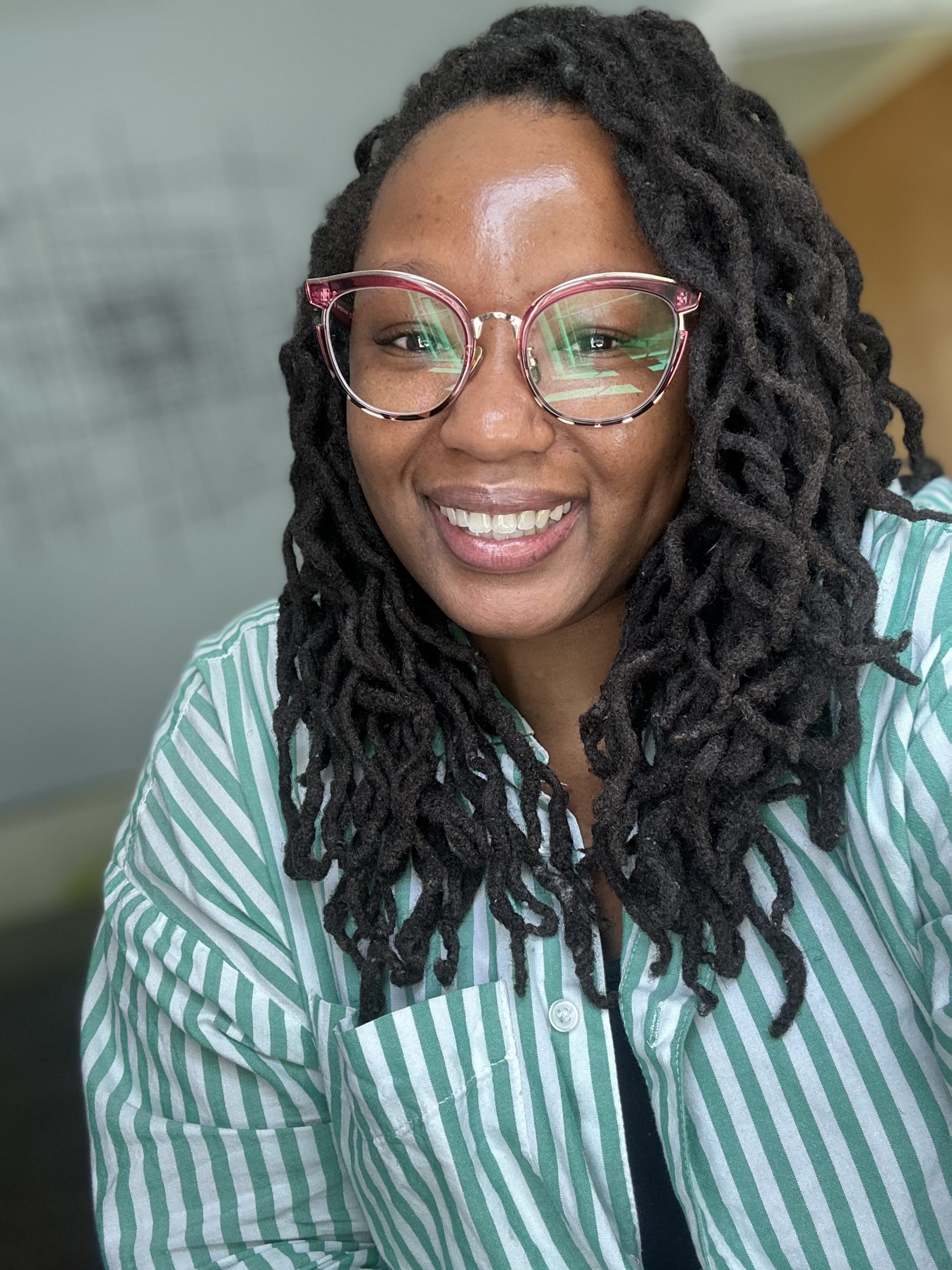
Taylor Ford, LMSW

September 29, 2025

Taylor Ford is a Connecticut native with a passion for addressing mental health and practicing intentional self-care. She is a graduate of UConn’s School of Social Work and obtained her licensure with the State of Connecticut. She aspires to help create safe spaces for people to explore their own mental health as well as non-traditional ways to heal.

Having worked in the Children’s Behavioral Health system for just shy of a decade, she focused primarily on family and youth engagement, skill and leadership development, training and providing internship supervision to social work students interested in the field. Her work has been presented in CT high school classrooms and System of Care conferences nationally. While still valuing children’s behavioral health, she has since pivoted into working primarily in both the Higher Education in Prison world and providing individual therapeutic support by working in a private practice.

Taylor has traveled as a subject matter expert and now an executive member of the Jamii Sisterhood to encourage prison education programs working with Project Freedom to incorporate mental health in wellness into their program infrastructure. As the Director of Mental Health Education at Second Chance Educational Alliance, Inc., she has created three courses that bring psychoeducation directly to maximum security students. As she is creating her place in the HEP field, Taylor continues to create and encourage opportunities for students, educators and program staff to challenge and expand the way they think about mental health in and outside of their classrooms.

Return to 2025 John and Valerie Rowe Scholars Lecture