Rowe Researcher: Neural Mechanisms for Behavioral Differences on Visual Integration in Schizophrenia

August 28, 2015

rowe researcher and professor
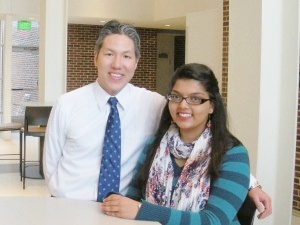
Dr. Chi-Ming Chen and Fariya Naz

Neural Mechanisms for Behavioral Differences on Visual Integration in Schizophrenia

Fall 2014

By: Chi-Ming Chen, Psychology (chair), James Chrobak, Psychology, Emily Myers, Speech, Language and Hearing, and Fariya Naz

Cognitive functions like planning, reasoning, inhibiting as well as working memory are disrupted in schizophrenia. Cognitive impairments precede psychotic symptoms, and findings have consistently shown deficits in visual integration. Specifically, the visual integration disturbance in schizophrenia pertains to both an impaired basic visual processing system as well as reduced feedback from visual attention regions that should actually be amplifying relevant visual representations in contrast to irrelevant information. The goal of this project is to identify differences and establish a baseline in the neuronal oscillations for a visual integration task in individuals with schizophrenia and healthy participants using electroencephalograms (EEGs).

Rowe Researcher: The Fabrication of Drug Encapsulated Microparticles for the Purpose of Drug Delivery for Pain Management


Ojha Anurag
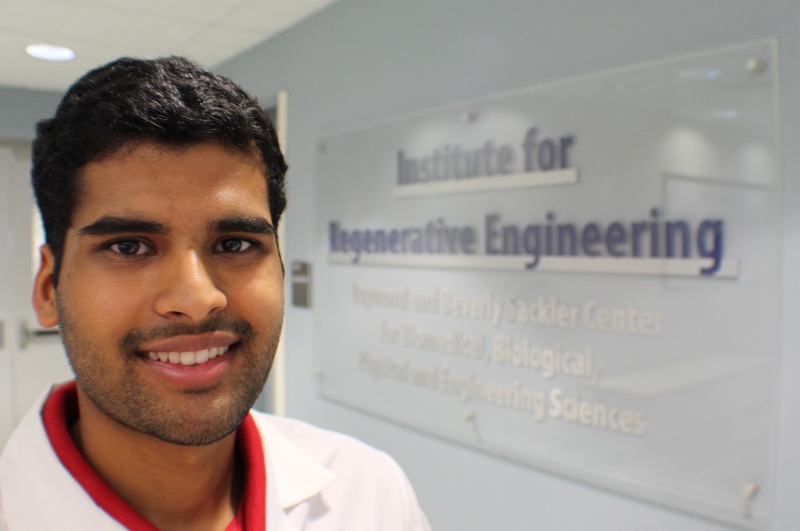
Anurag Ojha

The Fabrication of Drug Encapsulated Microparticles for the Purpose of Drug Delivery for Pain Management

August 2014 – August 2015

Department of Orthopaedic Surgery, Institute of Regenerative Engineering, UConn Health

Osteoarthritis (OA) is caused by the breakdown of cartilage. The deterioration of cartilage directly exposes joints to bone surfaces causing excruciating pain, decreased range of motion, and other forms of disability to patients. To combat the pain, oral non-steroidal anti-inflammatory drugs (NSAIDS) and intra-articular injections are used to manage pain from 24 hours to 7 days. However, both NSAIDS and intra-articular injections clear out of the system rapidly and require repeated dosages (leading to infection and excessive drug concentration at target site).

The purpose of this project is to develop a biodegradable microparticle (MP) implants for long lasting delivery of the NSAID celecoxib (CLX) for effective pain management of OA. Five different co-polymers of PLLA and PCL such as PLLA, Poly (LA-co-CL)(95:05), Poly (LA-co-CL)(85:15), Poly (LA-co-CL)(80:20), and Poly (LA-co-CL)(70:30) were used to fabricate MPs and release profiles were evaluated in vitro. The microparticles were fabricated by an oil-in-water emulsification technique followed by a solvent evaporation process. The drug loading efficiencies were determined using an extraction technique. The microparticles were characterized using FT-IR and light microscope.

HRTS 5899: Governance, Development & Human Rights in Sub-Saharan Africa

August 27, 2015

Instructor: Dr. Semahagn Gashu Abebe

With your advisor’s approval, graduate courses may be included in your Honors Final Plan of Study for graduation. They also count toward your Honors participation requirements.

This seminar will examine governance and development in Sub-Saharan Africa, focusing on topics of institutional development, good governance, democratization, human rights, globalisation and regional integration efforts. Students will critically analyze the opportunities and challenges of sustainable development and governance issues in Sub-Saharan Africa and compare and contrast the African context with development and governance patterns in the global north.

Dr. Abebe earned is doctoral degree at the University of Göttingen (Germany) and is a visiting scholar in the Human Rights Institute in 2015-2016.

Advanced undergraduate students are welcome. Please contact Rachel Jackson at rachel.jackson@uconn.edu or Dr. Abebe at semahagn.abebe@uconn.edu for more information.

MCB 5014: Structure & Dynamics of Macromolecular Machines

August 25, 2015

Instructors: Victoria Robinson, Eric May

With your advisor’s approval, graduate courses may be included in your Honors Final Plan of Study for graduation. They also count toward your Honors participation requirements.

Biological systems are filled with “machines” which perform specific functions and involve the movement of parts of the machine and the conversion of chemical energy in mechanical work. This course will introduce students to macromolecular cellular and viral machines and the experimental and computational techniques used to study these fascinating complexes. While having an understanding of basic biochemistry is important for this course, this course may be of interest to students with a background in the physical sciences or engineering. During the course we examine several types of machines including:

  • Self-assembling nanocontainer and packing machines (Viruses)
  • Protein manufacturing machines (Ribosomes)
  • Small molecule transport/pumping machines (Ion channel and multidrug transporters)

The course sessions will involve lectures, student led discussions and computational labs. The course will conclude by having the students develop a research plan to study a machine of their choosing.

POLS 5605: Seminar in Quantitative Methods of Political Science

August 24, 2015

Instructor: Prakash Kashwan

Prof. Kashwan invites interested Honors students of all majors to take his graduate seminar. With your advisor’s approval, graduate courses may be included in your Honors Final Plan of Study for graduation. They also count toward your Honors participation requirements.

Introduction to the data analysis techniques most often used by political scientists. Requires no previous background in statistics.

Over the past several years that Professor Kashwan has taught this class, he has developed a ‘non-mathematical’ approach to introductory statistics. The focus of the class, instead is on helping students become adept at understanding and applying the tools of statistics to political and economic questions of the day. This approach facilitates quality student engagement in the group projects that students work on for the semester. The style and the contents of teaching have resonated with students, which is evident in anonymous student evaluations, such as the following comments:

“Quantitative terms and concepts were presented in a way that was easily understood by liberal arts students.”

“Professor Kashwan – YOU ARE SO POSITIVE! You have a great attitude, you keep the humor and morale up in class and you clearly care about the happiness and success of your students. You are my favorite professor for that reason.”

Rowe Alumni Spotlight: Vanessa Carmona

May 15, 2015

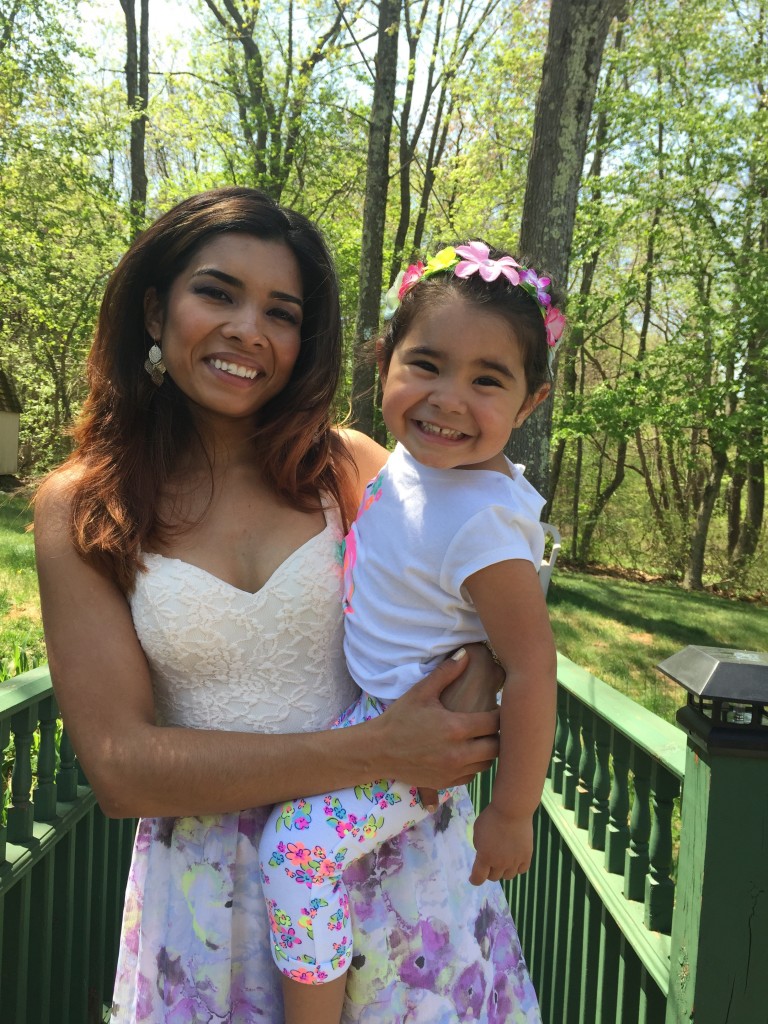
Vanessa Carmona and GraceUConn Year of Graduation (Undergraduate): 2012
Undergraduate Major(s): Psychology
Currently Employed By: University of Bridgeport, PA student
Updates: My little girl is turning 3 this year! Unbelievable how fast  children grow! I just finished my first term of PA school at the University of Bridgeport, it was tough but I worked hard and it paid off. Just trying to balance grad school and motherhood and loving it.

Take Two for Your Thesis Video Competition Winners

May 4, 2015

Congratulations to the winners of the 2015 Take Two for Your Thesis Video Competition! These videos are fantastic examples of the scholarly and creative work that UConn Honors students complete all across campus.

FIRST PRIZE: Elizabeth Rider (English), “Institutionalized Female Madness in American Literature from 1950-1999”
Thesis supervisor: Regina Barreca

What’s one piece of advice you have for future Honors seniors?
Make sure you set hard deadlines for yourself to complete your thesis throughout the semester; this will allow you time to really pay homage to the writing process and revise, revise, revise.

SECOND PRIZE: Roshni Patel (MCB), “Calcium-Sensing Receptor (CaSR) +986 G>T Associates with Habitual Physical Activity Levels and Muscle Size and Strength Response to Resistance Training Among Healthy Adults”
Thesis supervisor: Linda Pescatello

What’s one piece of advice you have for future Honors seniors?
Don’t rush to commit to something you may not like, take the time to investigate different fields and try new experiences to discover what you are truly passionate about!

https://www.youtube.com/watch?v=2PRnSXNk9_g&feature=youtu.be

THIRD PRIZE: Julianne Norton (Individualized: International Relations), “The Red Heifer: A Graphic Novel on Holocaust Postmemory”
Thesis supervisor: Francoise Dussart
Video credit: Cristobal Ortega

What’s one piece of advice you have for future Honors seniors?
Explore all the opportunities at UConn! If you haven’t yet applied for funding for your project, then you should definitely go learn more about the Office of Undergraduate Research.

2014-15 Faculty Member of the Year Award: Mark Boyer

May 2, 2015

Mark A. Boyer is a Board of Trustees Distinguished Professor, Director of UConn’s Environmental Studies program, and a Scholar-in-Residence for the Center for Environmental Science and Engineering. This is his twenty-seventh year at UConn. His research areas include global politics, climate change as it links the global to the local, and innovative pedagogy.

Starting July 1, he becomes Executive Director of the International Studies Association, with ISA’s headquarters relocating to UConn from the University of Arizona. He is past editor of International Studies Review (2008-2012) and International Studies Perspectives (2000-2004). He was also a 1992-1993 Pew Faculty Fellow in International Affairs and a 1986-88 SSRC-MacArthur Fellow in International Peace and Security.

As an educator, Mark works closely with students at all levels, including undergraduates and graduate scholars. He appreciates the unique experience of working with Honors students, specifically during their early years. “It’s simply more fun, and more intellectually challenging, to help provide the foundation for future scholarship, intensive learning, and even career development than it is to refine what is already a decided path into the future.”

Mark holds a B.A. in political science from Wittenberg University and M.A. and Ph.D. degrees from the University of Maryland. He is well published in his field.

2015 Distinguished Alumni Award: Robert LaBarre

Robert LaBarre has enjoyed a thirty-seven-year career as an industrial mathematician at United Technologies Research Center. He is currently Principal Mathematician and Group Leader, System Dynamics and Optimization, responsible for fifteen Ph.D. research scientists. In 2010, he was elected to the Connecticut Academy of Science and Engineering.
Dr. LaBarre received his Bachelor of Science (University Scholar) and Master of Science degrees in mathematics from the University of Connecticut in 1976 and 1978, respectively. In 1987, he began working part-time on a Ph.D., which he completed in 1992, also in mathematics from the University of Connecticut.

As an industrial mathematician, he has made numerous original contributions supporting the businesses of United Technologies Corporation, many used in our everyday lives. His cryptographic methods can be found in automotive key fobs and keyless door locks. He co-developed a stochastic optimization methodology resulting in a widely used, computationally efficient gradient-free scheme. His work in algebraic graph theory—recognized with a UTC Senior Vice President Award—provides an understanding of uncertainty propagation through complex systems. Additionally, Dr. LaBarre’s work in stochastic analysis led to the generation of bounds on elevator dispatching times—recognized by a UTRC Outstanding Achievement Award. His work in unstructured grid generation provided a time-efficient, density-varying methodology that was shown to accommodate second-order accurate numerical solutions to divergence form partial differential equations. He has authored or co-authored more than forty technical papers and has been awarded six patents by the United States Patent and Trademark Office.

Dr. LaBarre also makes a difference for people. He has mentored two generations of industrial mathematicians at UTRC; taught graduate and undergraduate courses as an adjunct faculty member during a twenty-year span at RPI-Hartford, UConn, and Worcester Polytechnic Institute; participated on three Ph.D. advisory committees (two currently completed); and been an active member of the Mathematical Sciences Advisory Board at WPI. He has participated in summer NSF-sponsored programs helping high school mathematics teachers understand mathematics outside of the educational framework. He has worked in the community by mentoring Honors Algebra students at East Hartford High School, and he has interacted with some of the best and brightest high school students around the world via the Intel International Science and Engineering Fair as a judge for the UTC student awards program.

Bob and his wife Mary (UConn ’79, B.S. in Animal Science), live in Ashford and have been married for thirty-five years. They have three adult children: Kyle (UConn ’06, B.S. in Finance); Kelly (UVM ’08, B.S. in Medical Laboratory Science); and Brenna (Cornell ’12, B.S. in Computational Biology), who is currently working on a Ph.D. in BioInformatics at the National Institutes of Health (in conjunction with Boston University). His experience playing soccer in high school and at UConn have instilled a long association with the game at all levels, which continues feverishly to this day.

2015 Distinguished Alumni Award: Patricia Friar

Patricia Friar retired from General Electric (GE) with more than twenty-six years of finance, human resources, and executive development experience. She was the Senior Vice President of Human Resources for GE’s Consumer Finance – Americas business with responsibility for more than 15,000 employees in the U.S., Canada, India, Mexico, South/Central America, and Puerto Rico. In this role she became Quality and Process Management certified and shrewdly deployed her financial and process skills to deliver more than $100 million in productivity to the business. In addition, she led the HR due diligence processes and integration for more than twenty business acquisitions, which contributed to business income growing from $75 million to $1 billion net income.

Prior to this role, Pat served as the first global Diversity Leader for GE Financial Services, where she partnered with the CEO’s leadership team in creating environments, practices, and educational experiences to accelerate business and personal growth in increasingly global markets. Pat’s efforts were featured in the December 2002 cover story of Working Woman magazine.

Prior to the Diversity leadership role, Pat was the Human Resources Leader for GE Capital’s Global Finance, Treasury, and IT functions, reporting directly to the SVP of Human Resources and the Chief Financial Officer simultaneously. She led all generalist, recruiting, and succession planning functions, as well as leading both the Connecticut Area Financial Management Program and the Information Technology Training Programs.

Before joining GE Financial Services, Pat worked at GE Neutron Devices in St. Petersburg, Fla., as Supervisor of Accounting, Benefits, and Statistics. Prior to that, she completed multiple six-month rotations as part of GE’s Financial Management Program, at GE’s Distribution Equipment Division in Plainville, Conn.

Pat joined GE directly after graduating from the University of Connecticut’s School of Business and Honors Program. Her thesis evaluated the process, outcomes, and lessons-learned from the problematic Heublein-KFC merger.

Pat is an active member of the School of Business Leadership Cabinet serving Dean John Elliott, and presents in Executive MBA programs in both Hartford and Stamford. Pat was elected to the UConn Founder’s Society in 2005 and the School of Business Hall of Fame in 2009. Additionally, she was integral in the development and roll out of the highly successful Risk Management curriculum. She’s equally active in her community as an executive coach, as a volunteer and member of her church, as Tim’s spouse, and as Mom to two great daughters, Christine and Catherine.