Web cookies (also called HTTP cookies, browser cookies, or simply cookies) are small pieces of data that websites store on your device (computer, phone, etc.) through your web browser. They are used to remember information about you and your interactions with the site.
Purpose of Cookies:
Session Management:
Keeping you logged in
Remembering items in a shopping cart
Saving language or theme preferences
Personalization:
Tailoring content or ads based on your previous activity
Tracking & Analytics:
Monitoring browsing behavior for analytics or marketing purposes
Types of Cookies:
Session Cookies:
Temporary; deleted when you close your browser
Used for things like keeping you logged in during a single session
Persistent Cookies:
Stored on your device until they expire or are manually deleted
Used for remembering login credentials, settings, etc.
First-Party Cookies:
Set by the website you're visiting directly
Third-Party Cookies:
Set by other domains (usually advertisers) embedded in the website
Commonly used for tracking across multiple sites
Authentication cookies are a special type of web cookie used to identify and verify a user after they log in to a website or web application.
What They Do:
Once you log in to a site, the server creates an authentication cookie and sends it to your browser. This cookie:
Proves to the website that you're logged in
Prevents you from having to log in again on every page you visit
Can persist across sessions if you select "Remember me"
What's Inside an Authentication Cookie?
Typically, it contains:
A unique session ID (not your actual password)
Optional metadata (e.g., expiration time, security flags)
Analytics cookies are cookies used to collect data about how visitors interact with a website. Their primary purpose is to help website owners understand and improve user experience by analyzing things like:
How users navigate the site
Which pages are most/least visited
How long users stay on each page
What device, browser, or location the user is from
What They Track:
Some examples of data analytics cookies may collect:
Page views and time spent on pages
Click paths (how users move from page to page)
Bounce rate (users who leave without interacting)
User demographics (location, language, device)
Referring websites (how users arrived at the site)
Here’s how you can disable cookies in common browsers:
1. Google Chrome
Open Chrome and click the three vertical dots in the top-right corner.
Go to Settings > Privacy and security > Cookies and other site data.
Choose your preferred option:
Block all cookies (not recommended, can break most websites).
Block third-party cookies (can block ads and tracking cookies).
2. Mozilla Firefox
Open Firefox and click the three horizontal lines in the top-right corner.
Go to Settings > Privacy & Security.
Under the Enhanced Tracking Protection section, choose Strict to block most cookies or Custom to manually choose which cookies to block.
3. Safari
Open Safari and click Safari in the top-left corner of the screen.
Go to Preferences > Privacy.
Check Block all cookies to stop all cookies, or select options to block third-party cookies.
4. Microsoft Edge
Open Edge and click the three horizontal dots in the top-right corner.
Go to Settings > Privacy, search, and services > Cookies and site permissions.
Select your cookie settings from there, including blocking all cookies or blocking third-party cookies.
5. On Mobile (iOS/Android)
For Safari on iOS: Go to Settings > Safari > Privacy & Security > Block All Cookies.
For Chrome on Android: Open the app, tap the three dots, go to Settings > Privacy and security > Cookies.
Be Aware:
Disabling cookies can make your online experience more difficult. Some websites may not load properly, or you may be logged out frequently. Also, certain features may not work as expected.
Ms. Alicia Ely Yamin is the Visiting Professor of Law at Georgetown Law and Program Director for the Health and Human Rights Initiative at the O’Neil Institute for National and Global Health Law. Her career focuses on the intersection of health and human rights, in both the academic world as well as in activism. She is known globally for her scholarship on and advocacy of right-based approaches to health. She contributed to the drafting of several General Comments by the UN treaty bodies, as well as UN Human Rights Council resolutions. She regularly advises the UN bodies related to health and human rights while providing guidance to NGOs on landmark litigation. She has served on WHO Task Forces and is currently a Commissioner on the Lancet Commission on Global Health and Law. Ms. Yamin was awarded the prestigious Joseph H. Flom Fellowship on Global Health and Human Rights from 2007 to 2011.
Ms. Yamin has written a book, Power, Suffering and the Struggle for Dignity: Human Rights Frameworks for Health and Why They Matter, which was published by the University of Pennsylvania Press. This work is focused on defining what a human rights based approach to health and development means, and why it matters. Additionally, it provides a foundation for the understanding of how a human rights based approach implies the potential for social transformation.
Recognized as one of the leading scholars in American education, Dr. Fetterman is author to 16 books and hundreds of articles and chapters on the subject. The recommendations from his book, Excellence and Equality, led the U.S. Department of Education to formulate a panel to select a national center for the gifted and talented. As an appointed member, Dr. Fetterman recommended the University of Connecticut to the panel, granting the University a $10 million federal award for the National Research Center for the Gifted and Talented, now directed by Dr. Joseph Renzulli. Dr. Fetterman’s fields of expertise include evaluation, medical and teacher education, dropout programs, gifted and talented education, higher education, and distance learning. His empowerment evaluation method (a self-help approach) makes great contribution to the theory and practice of education–and according to the American Evaluation Association, remains “one of the greatest evaluation innovations of the past two decades.”
Dr. Romanoff has witnessed significant gains and challenges in the field of pain management since beginning his career as an anesthesiologist in 1987. The increased use of controlled opioid medications for non-malignant chronic pain has proved controversial, providing much needed aid to many individuals while fostering an epidemic of overdoses and addiction in both patients and society. Dr. Romanoff is on the committee on Narcotic Use and Diversion of the North Carolina Medical Society in North Carolina (NC), one of four states with the highest incidence of abuse. In 2007, Dr. Romanoff helped create a centralized database of all controlled medicines in NC. In addition, he has participated in several state-wide committees focusing on developing protocols and policies for the reporting and monitoring of narcotic use. In 2013, he was selected to participate in Project Lazarus–an educational and mentoring program set up by the NC Department of Health and Human Services. Dr. Romanoff’s continued lecturing, mentoring, and advising display his efforts to combat prescription drug abuse and ensure safe access to medication for those in need.
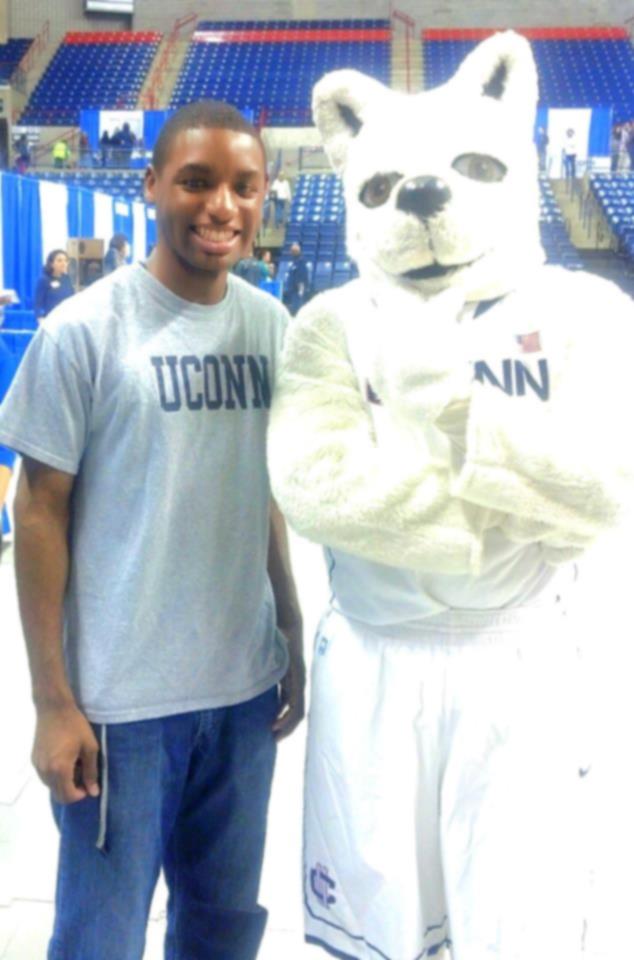
As you go through the college decision process, you’ll want to know as much as you can about your potential schools. Once you’ve been admitted into UConn and the Honors Program, there are several ways to find out what it’s like to be a Husky!
To really experience the day-to-day life of a UConn student, prospective students can sign up for a Husky-for-A-Day visit. At their visit, prospective students will shadow a current UConn student. They will attend a class or two, visit a dining hall, and get an inside look at the residence halls. Throughout the day, their UConn student host will be available to answer any questions about academics, campus life, and everything UConn.
This year’s remaining Honors Husky-For-A-Day visits will occur on the following days:
Monday, April 14th
Tuesday, April 22nd
Visit admissions.uconn.edu and click on the “visit” tab for more information and to register!
When you attend an Honors Husky-for-a-Day visit you will have the opportunity to attend our Honors Meet and Greets, which are run by HIPS (Honors Initiative for Prospective Students) student coordinators. At the Meet and Greets, students and parents will be able to mingle with current Honors students as well as Honors faculty and staff over light refreshments. It is an extremely valuable experience to get acquainted with the many faces of the Honors Program at UConn!
Another opportunity to get to know UConn is the Spring Open House, which will occur on April 12th this year. On this day, students and their families can get tours of the University and of the Buckley/Shippee Complex , the first-year Honors Learning Community. There will be many opportunities to speak with representatives from various organizations and resources on campus. In addition, there are presentations from the different schools and colleges, Residential Life, Study Abroad, Financial Aid, and more! Again, visit admissions.uconn.edu for more information and to register for Open House!
We look forward to having you visit campus to learn more about UConn. If you questions about these opportunities or the University, please email uconnhips@gmail.com.
Sarah Levine (’16) Communication and Journalism HIPS Coordinator
Quian Callender, Honors student, class of 2016, Health Care Management major, Public Policy minor
My favorite part of being a Husky includes the ability always meet new people from all walks of life and across all interests. In addition to UConn’s size, tight communities and close, lasting relationships with peers form. There’s a huge sense of pride that’s apparent everyday especially during UConn traditions such as Homecoming Week and athletic games. As a UConn student, you will have the opportunity to pursue any of your interests through the Honors Program, clubs, organizations, volunteering opportunities, internships, and research.
Sarah Levine, Honors Student, Class of 2016, Communication and Journalism Major, Spanish Minor
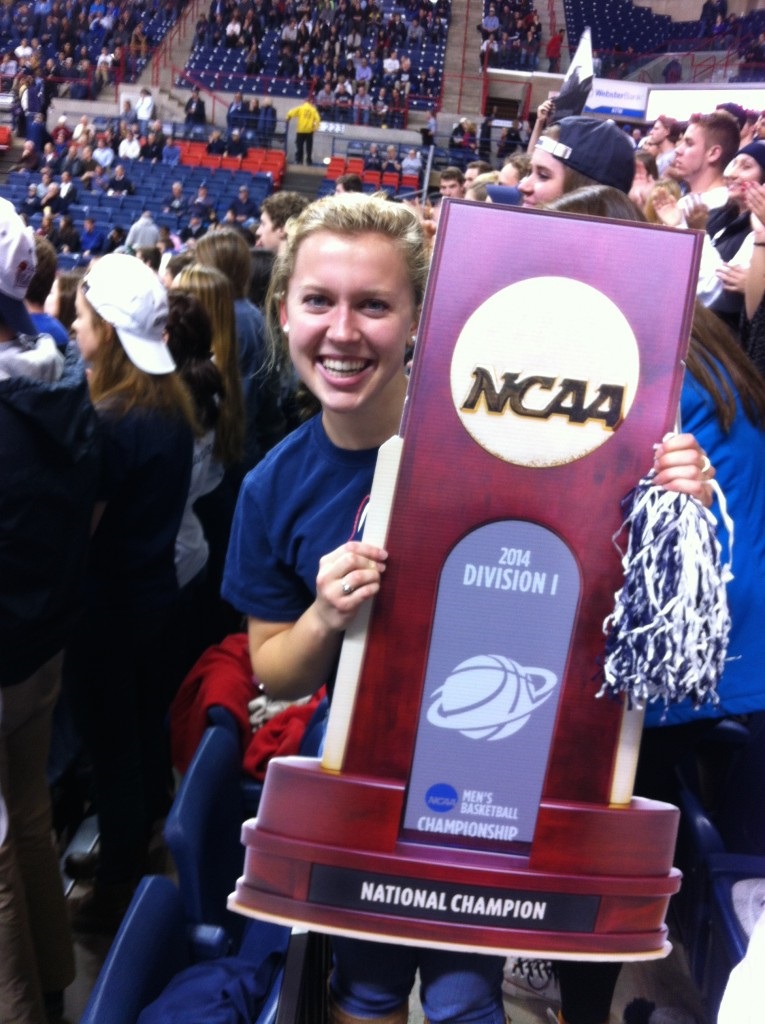
My favorite thing about UConn is its size and diversity. In such a large school, I interact with all kinds of people every day. There are always other people who are also interested in things that you are interested in- just look at all of the clubs, sports, and activities we have on campus. Through these things, students can join tighter communities that make a 17,000-student university feel like home. Personally, the thing that helped me transition into college the most was being a part of the Honors community. Faculty and advisors are always around to answer questions or just talk, and I loved living with other honors students with whom I shared similar interests and classes. From the minute I stepped onto campus, everyone has been welcoming and brimming with campus spirit. Everyone is proud to be a Husky- especially at all of our many sporting events! Go Huskies!
Abby Raynor, Honors Student, Class of 2017, Molecular and Cell Biology Major, Pre-Med Track, Spanish Minor
I am a freshman here in the University of Connecticut Honors Program. I intend to major in Molecular and Cellular Biology and minor in Spanish, and I am a part of UConn’s pre-med program. On campus, I am involved in numerous clubs and organizations like Pre-Med Society, Global Brigades and the UConn Club Swim Team. I am also an active member of the Honors community by volunteering at many recruitment events as a HIPS Student coordinator, and I’m currently training to be a student facilitator in the freshman seminar course each first-year Honors student is require to take. In my free time I love to attend all UConn sporting events, especially basketball, and show off my Husky pride!
Holly Chase, Honors Student, Class of 2017, Health Care Management Major, Neuroscience Minor
My favorite part about being a Husky is the limitless opportunities that are available to each student. Your college experience is reflective to the work you put into it, and I believe engaging in campus events, clubs, and organizations is the best way to begin! In addition to volunteering for HIPS, I play Club Field Hockey, am a member of the Honors in Business Association, and consider myself an avid basketball fan! Through these outlets, I have made fantastic friends and gained peer connections that have positively shaped my direction as a student. Get involved and have fun! Bleed Blue!
Vincent Pistritto, Honors Student, Class of 2018, Chemistry and Music Majors
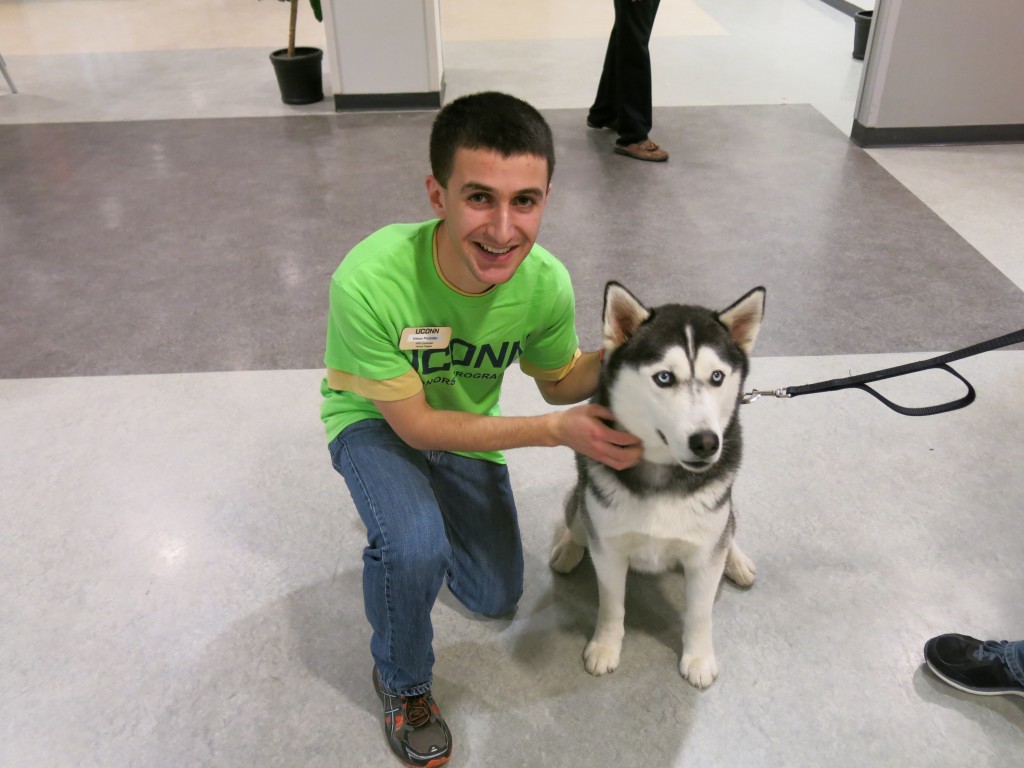
Being a Husky means many things-either you’re pulling a sled in the Iditarod, you’re wearing a winter coat all year round, or you go to UConn. Coming from a small town in western Connecticut, everybody knows that when you’re a Husky, it only means one thing-you go to UConn. It is that sort of recognition and pride that sets UConn apart. You can meet so many different people and engage in truly thought provoking study while at the University. As a member of the Honors Program, you have a smaller family nestled within the larger student body. This gives you a small campus feel at a larger university. In addition, there is a wide variety of extra-curricular activities to get involved with which will enrich your college experience. I hope you all will come to UConn and get to experience first-hand what a special place Storrs, Connecticut truly is. Go Huskies!!!!
Kyle Terracciano, Honors Student, Class of 2018, Chemical Engineering Major, Mathematics Minor
I am a freshman in the University of Connecticut Honors Program. I am currently majoring in Chemical Engineering with a minor in Mathematics. On campus, I am a member of the American Institute for Chemical Engineers and I volunteer for the Northeast Regional Science Bowl, one of the largest events of its kind in the country Over the summers, I coachcompetitive swimming in my hometown of Middlesex, NJ. I stay involved with the Honors Program by helping organize events for prospective honors students as a HIPS Student coordinator. I am also currently in training to be a UNIV 1784 facilitator for next year. What I love about UConn is all of the amazing academic opportunities provided for students and the abundance of school spirit. Go UConn!
This past summer, I had the amazing opportunity to intern at the National Marine Life Center (NMLC) in Bourne, Massachusetts. My internship position could be labeled as an Animal Care and Husbandry Intern as well as an Education Intern. The opportunities I was able to experience were amazing and it was a summer I will never forget.
For the animal care portion of my internship, my responsibilities included caring for our in-house patients, Northern Red Bellied Cooters. These freshwater turtles are endangered in Massachusetts. We had several turtles that had severe shell deformities due to lack of correct enclosure lighting and food source, as well as other turtles suffering from different diseases and injuries. As an intern I was responsible for husbandry and tank care, as well as assisting in treatments, such as calcium supplements and tube feeding. The interns participated in rounds with the veterinarian and maintained the public critter tank.
As for the educational portion of my internship, I helped in leading two types of programs for kids. The NMLC has two programs that the interns were responsible for: Little Flippers Club, and Marine Medical Mystery. Little Flippers Club is for younger children, in which children learn about a group of animals through a story, arts and crafts, and presenting artifacts. In Marine Medical Mystery, the interns presented information to older groups of kids. We took a specific animal and pretended to treat that animal as if it were in the center. These education programs were good opportunities for us to present our knowledge.
As the final portion of my internship, I completed a project that consisted of creating a craft binder with instructions and samples for each craft. I also refurbished a harbor seal skeleton, creating bones out of clay that were missing, creating a new base, and new wiring.
The experience I have gained from this internship will definitely benefit me in any future endeavors. But in order to participate in this internship, I needed professional experience that I gained through the University of Connecticut’s Honors Program. As an Honors student, I was able to participate in the Facilitator and Peer Mentoring class. This role gave me experience in leading in a classroom setting, which definitely benefited me in the education portion of my internship. I also gained one-on-one experience from UConn’s Peer Allies Through Honors (PATH) program. This benefited me in working with the other interns as well as the other staff at the NMLC.
Author Anonymous
Honors students may participate in a variety of leadership opportunities offered through the Honors Program and UConn as a whole. These involvements provide them with invaluable experiences that contribute to their personal and professional development, often leading to further opportunities at UConn and beyond.
Some of the best opportunities to take advantage of at UConn and in the Honors Program are internships. During the spring 2012 semester, I participated in the UConn Honors Congressional Internship Program in Washington, D.C. Each year, UConn places a student with each one of the Connecticut Senate and House offices in Washington, D.C. As part of this internship, I worked in the office of Congresswoman Rosa DeLauro (CT-3). I applied for the D.C. internship program because I wanted to get a practical and professional experience in my discipline of political science. I hoped the experience would help me grow professionally and that I would learn about politics and Congress in a way not possible in the classroom. Add to that the prospect of living in Washington, D.C. on Capitol Hill, and the decision to apply was an easy one.
As an intern, some of my daily tasks included compiling news clippings, sorting mail, answering phones, booking tours for constituents, and entering constituent correspondence in the IQ computer system. In addition, I often was asked to attend briefings or hearings, on topics ranging from health care to agriculture policy, and type up memos for the relevant staffer. Furthermore, I wrote letters in response to constituent questions and performed other projects for the staff as needed. There were often days when I was the only full-time intern in the office, adding to my responsibilities.
Also, just living in D.C. near the National Mall and Smithsonian museums, having the ability to do research for class in the Library of Congress, and experiencing many different D.C. restaurants and neighborhoods always provided so many things to do. In particular, getting a tour of the Capitol Dome and being around for the blooming of the cherry blossoms were definitely highlights of the semester.
My experiences in UConn and Honors prepared me very well to take on this internship. Political science courses I had taken, particularly about Congress, helped give me the knowledge to understand how the institution worked and make connections with what I experienced every day. Furthermore, I developed organizational, research, communication, and leadership skills through Honors Program organizations, facilitating an UNIV class, and Honors coursework.
Overall, the D.C. Internship program helped me develop both professionally and academically, and made me a better political science student and citizen. The program fulfilled and exceeded my expectations. This amazing program is just one of the many internship opportunities the University of Connecticut and Honors Program can help students attain to further their personal and professional development.
John Dearborn, Political Science major, Honors Scholar, Class of 2013
To learn more about the UConn Honors Congressional Internship Program please visit the Honors Study Abroad/Away web page.
URL: https://events.uconn.edu/live/json/v2/events/response_fields/location,summary/date_format/%25F%20%25j,%20%25Y/group/Honors Program/group/Office of National Scholarships & Fellowships/group/Office of Undergraduate Research/max/12/
If not explictly stated otherwise, start_date/today and end_date/6 months are implied in the URL.